Southern Kruger Bird Photography: Where to Photograph Birds
Where do you photograph birds in Southern Kruger?
The honest answer is, almost anywhere. The better question is how you photograph them once you find them.
Southern Kruger bird photography is rewarding because this part of the Kruger National Park offers such a useful mix of rivers, low-level bridges, camps, dams, woodland, open grassland and seasonal pans. Birds are everywhere if you are prepared to look properly, drive with patience, and pay attention to the light. It is also one of the best regions for people who want to do more than simply tick species off a list.
This is an area where you can make strong images, not just record sightings.
Why Southern Kruger Is So Good for Bird Photography
The southern region of Kruger, from Paul Kruger Gate through Skukuza, on towards Tshokwane, down to Lower Sabie, across to Crocodile Bridge, along the S25 to Malelane, and back towards Pretoriuskop, gives you excellent value for your time.
There is enough road to cover useful ground, but not so much that the day turns into a blur of tar, dust, and regret. More importantly, there is a real variety of habitat.
You have rivers, low-level bridges, woodland, mixed savanna, open grassland, seasonal pans, and productive dams. That means raptors, woodland birds, waterbirds, herons, kingfishers, bee-eaters, summer migrants, and plenty of smaller subjects can all become part of the day.
The real advantage is variety. In one route, you can move from river edges to open grassland, from camp gardens to woodland, and from quiet dams to low-level bridges. For photography, that gives you options — and options matter.
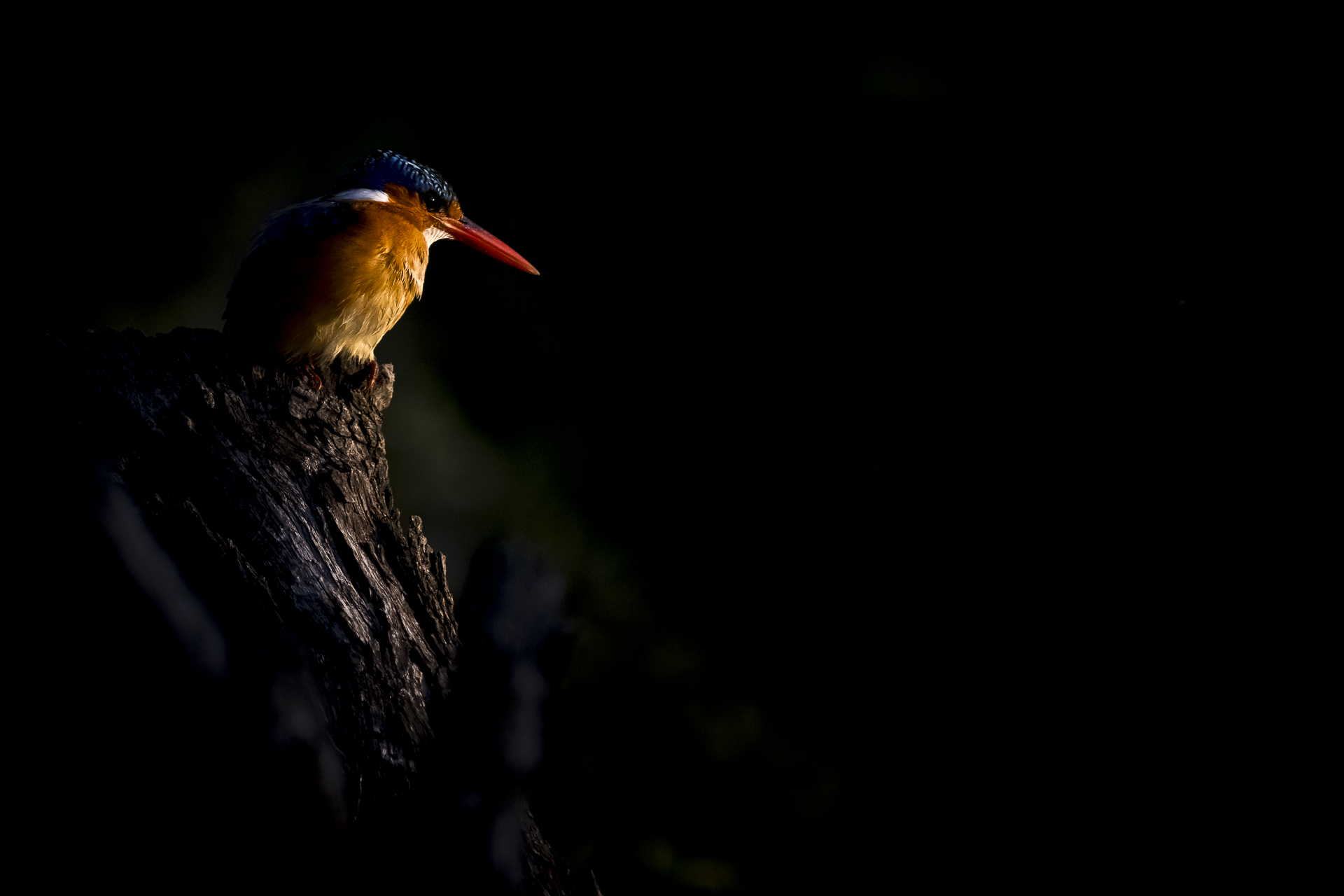
A Practical Southern Kruger Bird Photography Route
If I were planning a full bird photography day in this part of Kruger, I would start at Paul Kruger Gate and take the H11 towards Skukuza.
One of the obvious early highlights is Lake Panic. It remains one of the better birding and bird photography spots in Southern Kruger, especially when there is a decent amount of water. It is one of the more reliable water sources in the area, which means it often attracts a mix of waterbirds throughout the year.
In the right conditions, Lake Panic is excellent early in the morning. The light can be good, the water may give you clean reflections, and the hide setup allows for a quieter and more deliberate approach than the usual roadside stop-start chaos.
That alone is worth something.
Skukuza: More Than Just a Rest Stop
From Lake Panic, I would continue to Skukuza for a quick stop. The camp itself is worth taking seriously, not just using as a bathroom break before rushing off again.
Because Skukuza sits on the Sabie River, there is always bird activity around. Camp birds are often more accommodating than people expect. Around Skukuza you can find hornbills, green pigeons, bushshrikes, owls if you are lucky, and plenty of smaller photographic opportunities if you are prepared to slow down and walk carefully.
The average visitor tends to ignore camp birds because they are too busy charging towards the next lion report.
That is often their loss.
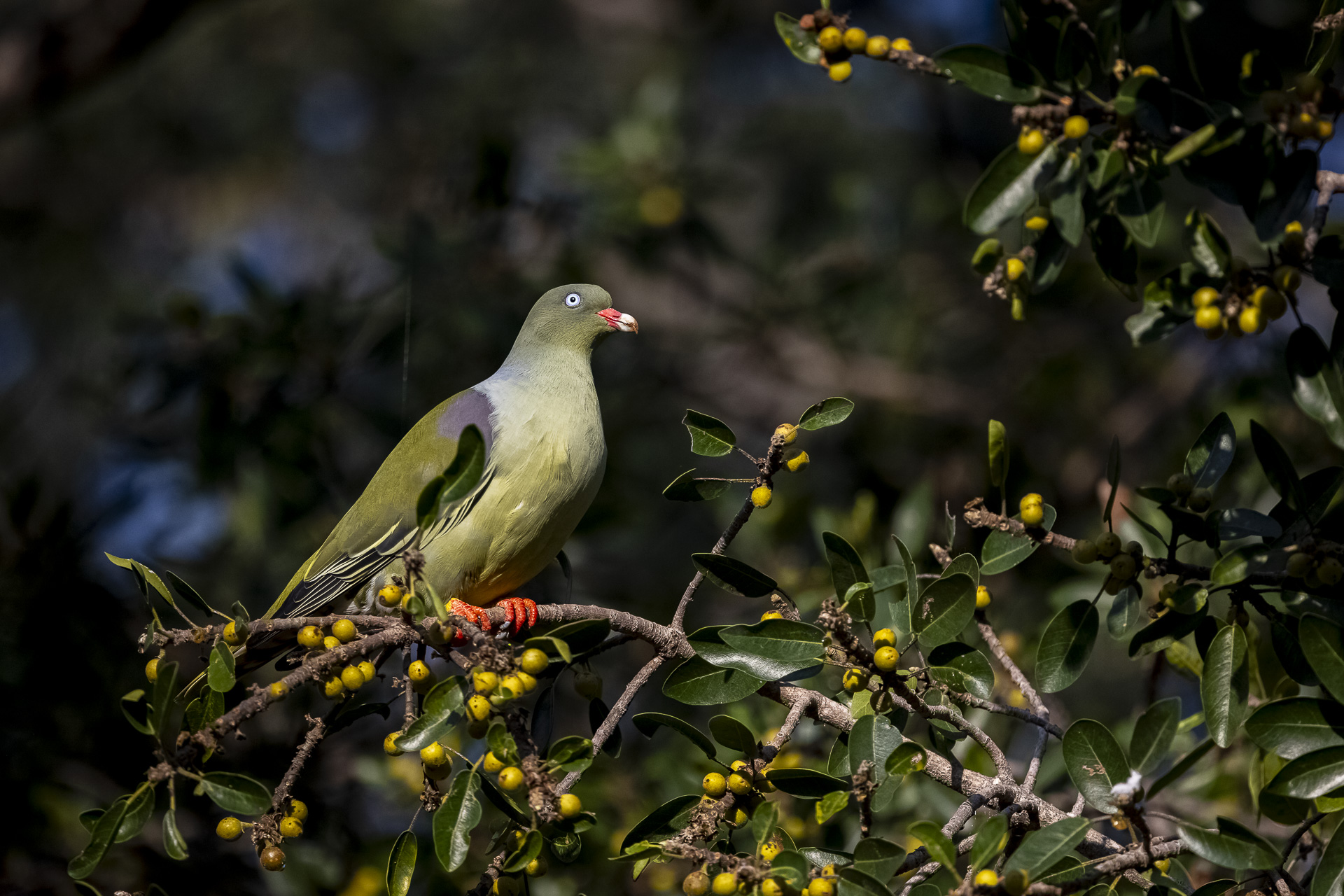
The Sabie and Sand River Low-Level Bridges
From Skukuza, I like to cross the Sabie River low-level bridge on the H12 and then continue over the Sand River low-level bridge.
Both of these can be productive photographic stops early in the day. The low-level bridges give you one of the great advantages in Southern Kruger bird photography: eye-level or near eye-level access to birds along the water’s edge.
If there are buffalo in the river, you may find oxpeckers and egrets. Kingfishers, herons, and the occasional giant kingfisher can all provide good opportunities. In winter, very early on the Sand River bridge, there is even the chance of more unusual birds such as white-backed night heron.
These bridges reward people who stop, scan properly, and do not assume the only subject is the river itself.
Tshokwane, Leeupan and Seasonal Pans
From the Sand River area, I would continue towards Tshokwane. Leeupan is one of the standout areas on that route when there is water in the pan.
Seasonal pans can be wonderfully productive, and this one has built a reputation for good reason. It can hold a surprising amount of life and has a habit of producing interesting birds and the occasional rarity.
That said, this is where I would draw a line between birding and bird photography. If your goal is to chase a single rarity and spend the day staring at one patch of reeds, that is perfectly fine, but that is a different day out. If you want to make photographs, the broader route often gives you more.
For photography, I would rather keep working the light, angles, perches, behaviour, and backgrounds than become completely fixed on one bird that may or may not show itself properly.
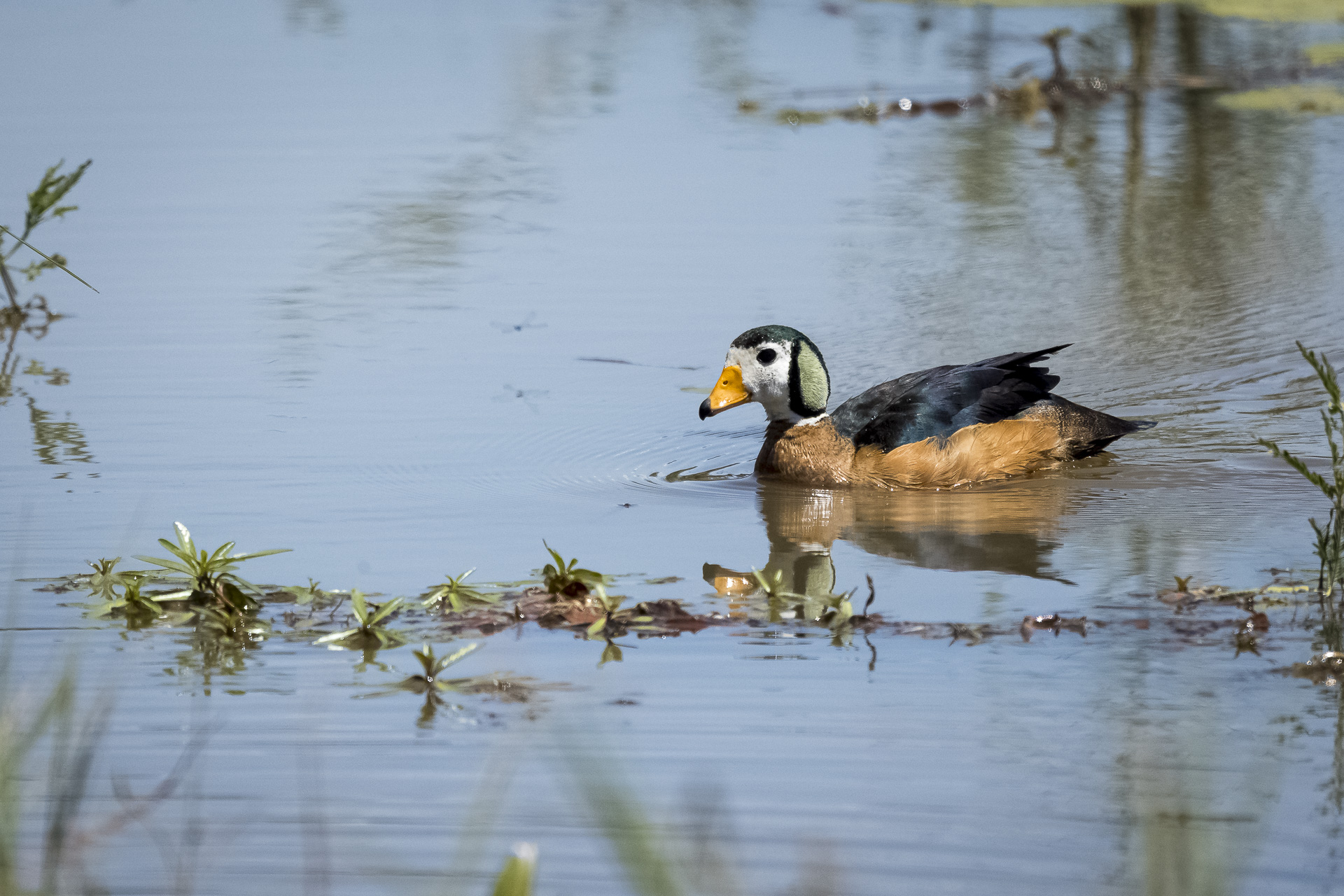
The H10, S128 and S129 Towards Lower Sabie
Coming back down on the H10 towards Lower Sabie, I would strongly consider the S128 and S129.
These roads pass through more open grassland country and can be excellent for grassland birds, raptors, and seasonal wet patches. In summer, some of these areas can produce wonderful photographic opportunities, especially when pans are holding water and migrant species are active.
This is the sort of habitat where you should scan dead trees, fence-height perches, open ground, and pan edges rather than simply staring into the nearest bush and hoping for a miracle.
Bird photography in Southern Kruger is often about reading the habitat before you see the bird.
Lower Sabie and the Sabie River
Lower Sabie itself is another worthwhile stop.
The Sabie low-level bridge can be productive for kingfishers, herons, and other water-associated species. The camp area also offers very good birding and photography if you are prepared to spend time there.
Again, camps are often underrated. In good light, and with birds that are used to human movement, there can be excellent chances for clean, intimate portraits.
Sometimes the best bird photograph of the day is not found deep in the bush. It is sitting quietly near camp, waiting for someone to stop rushing.
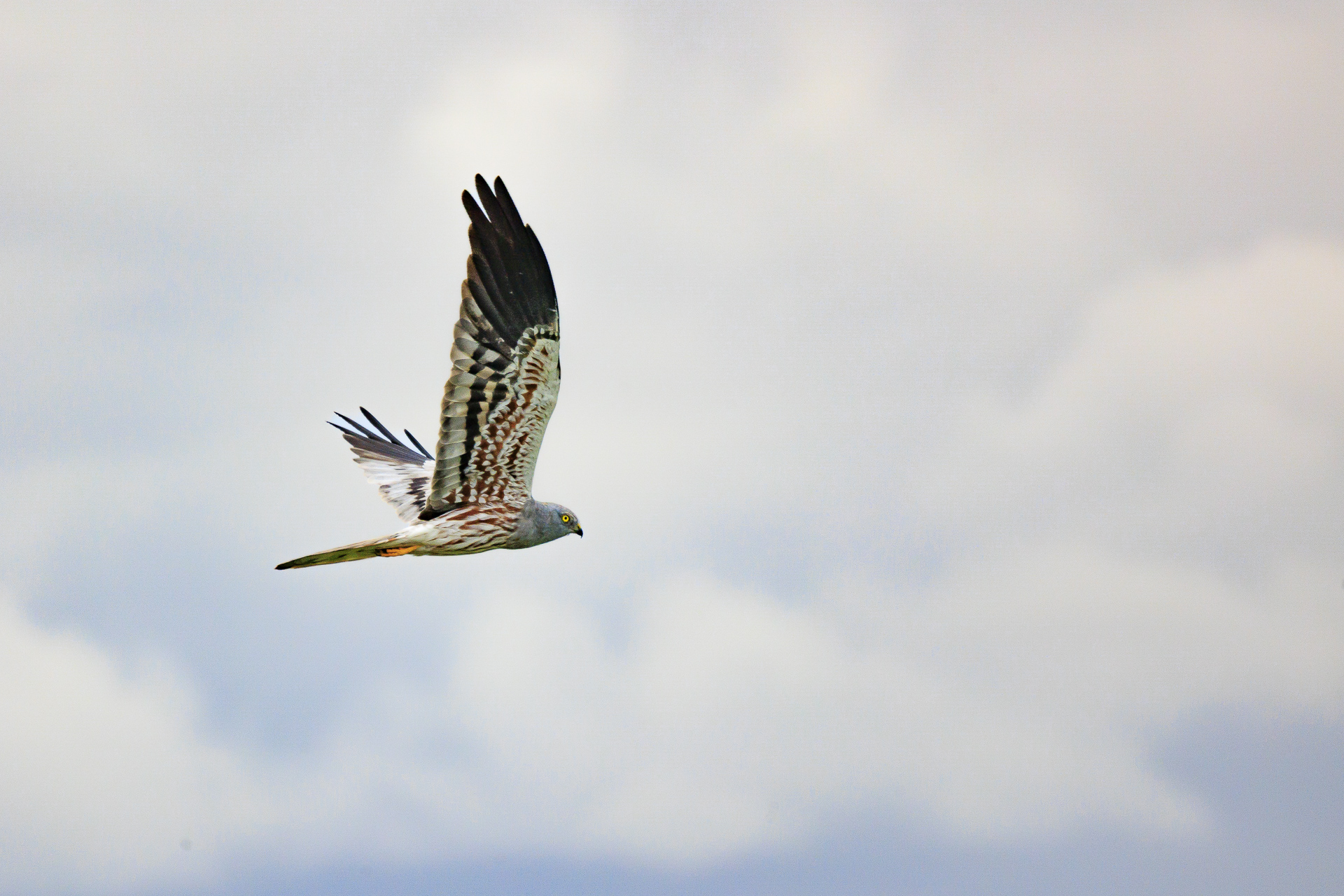
Crocodile Bridge, the S25 and Gardenia Hide
From Lower Sabie, I would continue along the H4-2 towards Crocodile Bridge and then take the S25 westwards along the Crocodile River.
The S25 is one of those roads that can be rewarding in several different ways. It has a pleasant rhythm to it, decent habitat variety, and the river corridor adds another set of possibilities.
The Biyamiti high-level bridge is worth checking, and along this stretch there are also bee-eaters nesting in the bridge wall on the southern side during the warmer months. The Gardenia Hide is another stop worth including, especially if you are trying to vary your approach and work a quieter water setting.
Hides are useful because they encourage you to stop. That sounds obvious, but stopping is one of the most underrated skills in wildlife photography.
Malelane Bridge in the Late Afternoon
Eventually, I would end that part of the day around Malelane Bridge, which is one of my favourite late afternoon bird photography spots in Southern Kruger.
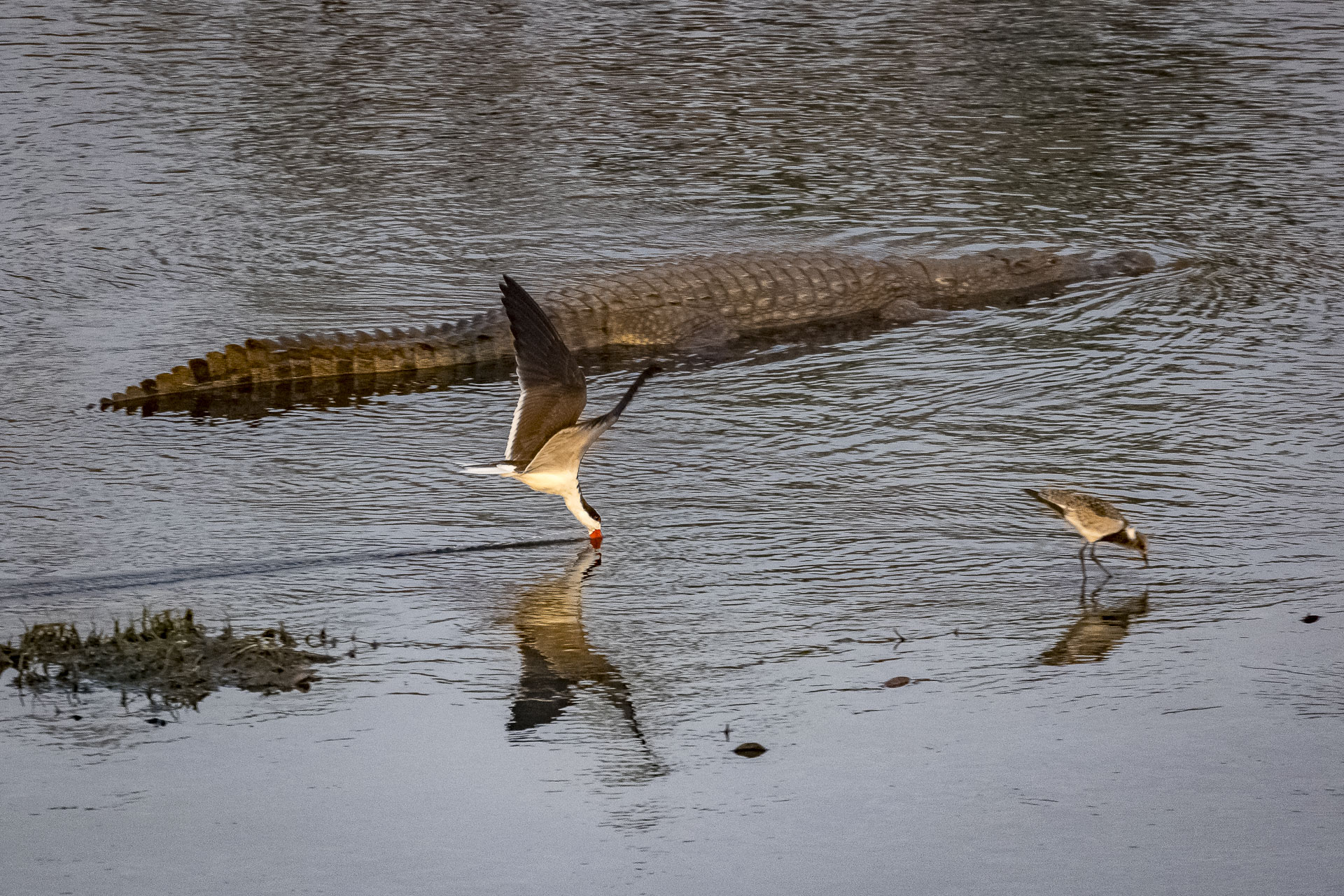
The light late in the day can be beautiful there, and there is often more movement as the heat starts easing off. Kingfishers, herons, and other waterbirds can all give you opportunities, and there are times of year when African skimmers are present and active.
The bridge also allows for slightly more flexibility with angle and position than you get from a vehicle alone, which can make a real difference photographically.
Light, angle, and position are often what turn a bird sighting into a bird photograph.
Pretoriuskop, Transport Dam, Shitlave Dam and Nyamundwa Dam
Pretoriuskop also deserves a mention because it offers a slightly different feel again.
Transport Dam, Shitlave Dam, and Nyamundwa Dam on the S1 all add further bird photography value to the broader Southern Kruger region. These water bodies can be very worthwhile, especially if you are looking for a change from the more river-driven sections nearer Skukuza and Lower Sabie.
They also give you another reminder that bird photography in Kruger is not limited to one famous hide, one bridge, or one route. The better approach is to understand what each area offers and then work with the light, season, and conditions on the day.
Summer and Winter Bird Photography in Southern Kruger
What makes Southern Kruger so good for photography is not only the birdlife itself, but the variety of ways you can photograph it.
There are clean perches, dead trees for raptors, rivers with natural settings, bridges that allow eye-level work, and enough habitat variation to keep the day interesting.
In summer, the park is greener, the migrants are in, the cuckoos are calling, and breeding plumage and behaviour add life to your images. It is a wonderful time for activity, colour, and variety.
In winter, the bush is more open, the golden light lasts longer, and some of the most beautiful photographs of quite ordinary birds happen in those quieter, softer hours.
Both seasons work. You simply need to adjust your expectations and your approach.

How I Approach Bird Photography in Southern Kruger
The mistake many people make is driving too fast and photographing too carelessly.
When I am specifically looking for birds, I generally drive at around 30 to 35 km/h. That is slow enough to see into the bush, but fast enough to cover useful ground. Just as importantly, I pay attention to the light all the time.
Too many people photograph a bird simply because it is there. That is a perfectly good way to fill a memory card, but not always the best way to make a photograph.
Common birds in beautiful light are often far more rewarding than rarities in miserable conditions. The lilac-breasted roller, which has probably been photographed more times than it would care to know, can still give you a superb image if the light, perch, and moment are right.
Good bird photography is not only about finding the bird. It is about deciding whether the situation can become a photograph.
Useful Birding and Kruger Resources
For visitors planning time in the park, the official SANParks website remains the best place to check current Kruger National Park gate times, conservation information, park rules, and visitor updates.
BirdLife South Africa is also a useful resource for anyone wanting to learn more about birds, conservation, and birding in South Africa.
Final Thoughts
Southern Kruger suits beginners, experienced bird photographers, and just about anyone in between. The road network is extensive, the habitat is varied, and the chances of coming home with worthwhile images are high.
It is also one of those areas where bird photography sits comfortably alongside the rest of a normal Kruger day. You may still bump into wild dogs or a leopard while looking for bee-eaters or kingfishers, which is not exactly a hardship.
More importantly, if you approach the region properly, it rewards patience, observation, and a willingness to look beyond the obvious.
And in Kruger, that is usually where the better photographs begin.
If you would like to improve your bird photography in Kruger, or spend time in the field with someone who knows these routes, light, habits, and small moments well, join me for a private photographic safari.
You now know a guy who would be more than happy to show you around his backyard.
Join me in the field for a private photographic safari.
Website: www.andrewaveley.co.za
Email: andrew@andrewaveley.co.za

2027 Bird Photography Workshops
I will also be hosting dedicated Bird Photography Workshops in 2027 for photographers who want to spend focused time in the field improving their bird photography, fieldcraft, camera use, light awareness and overall approach to creating stronger images.
These workshops are designed for photographers who want practical, honest, real-world guidance in the bush — not just a list of birds, rushed sightings, or another memory card full of “almost there” images. We all have enough of those already.
For more information about my 2027 Bird Photography Workshops, please visit:
2027 Bird Photography Workshops link coming soon – Use the form now please
Broader Kruger Bird Photography FAQ
Where is the best place for bird photography in Southern Kruger?
Southern Kruger has several excellent bird photography areas, including Lake Panic, Skukuza, the Sabie and Sand River low-level bridges, Lower Sabie, the H10, S128, S129, S25, Gardenia Hide, Malelane Bridge, Transport Dam, Shitlave Dam and Nyamundwa Dam.
Is Southern Kruger good for beginner bird photographers?
Yes. Southern Kruger is excellent for beginner bird photographers because the road network is easy to work, the habitats are varied, and many bird photography opportunities can be found from roads, camps, hides, bridges and dams.
What makes Southern Kruger good for bird photography?
Southern Kruger offers a strong mix of rivers, woodland, open grassland, seasonal pans, dams and camps. This habitat variety means photographers can work with waterbirds, raptors, kingfishers, bee-eaters, woodland birds and summer migrants in one broader region.
What is the best season for bird photography in Southern Kruger?
Summer is excellent for migrants, breeding activity, greener backgrounds and bird calls. Winter offers more open bush, longer golden light and softer conditions. Both seasons can produce strong bird photographs if you work with the light and habitat.
Do I need to chase rare birds in Southern Kruger to get good images?
No. Rare birds are exciting, but strong bird photography is often about light, perch, background, behaviour and angle. Common birds in good conditions can produce better images than rare birds in poor light.